You may have noticed that YouTube has recently implemented some new features. One of them is a very progressive idea, while another is just plain bizarre.
The first feature lets you buy many songs directly from the pages on which you hear them. Music videos uploaded by certain YouTube partners, like EMI, now feature Amazon MP3 and iTunes links below the videos. As Jacqui Cheng of Ars Technica points out, the links are very unobtrusive, and may even be difficult to spot if you’re not looking for them. Below is a capture of the video for Goldfrapp's Number 1. Notice the links to the Amazon and iTunes stores at the bottom.

These click-to-buy links are also appearing for other media. Links to things like video games are featured on the pages of some game trailers. Google says they would like to apply this practice to even more kinds of videos. Cheng proposes that this technology could be used to feature links to buy songs used in mash-ups. This could be accomplished with audio fingerprinting, which YouTube is already using to prevent unauthorized uploads. Unlike its current use, fingerprinting would then benefit viewers as well as the content owners. Of course, uploading mash-ups in the first place is illegal, so it would be somewhat contradictory to the technology’s original purpose. Once again, everybody loses because of a read-only culture.
Download links are currently present only on the US site, but Google plans to expand the feature to include other countries and content providers. They’ve also hinted at possible changes in the UI – probably a good idea if they want people to notice the undistinguished buttons.
I think this is an excellent idea that should have been implemented a long time ago. It will certainly help to quiet opponents of YouTube like Viacom who don’t want their content posted on YouTube. It gives them the unbeatable incentive of having their content easily available for purchase on the pages they often try to have removed from YouTube. It may even inspire an increase in uploads by copyright owners, since it’s essentially free advertising for their material. After all, how could anyone accuse YouTube of promoting piracy when they explicitly encourage users to purchase the media featured on their site?
YouTube users will also notice that commenting on videos is now different. The second new feature is the seemingly frivolous ability to have your comments read aloud to you before you post them. Webcomic xkcd speculates that it was their comic (seen below) featuring a suspiciously similar tool that inspired the latest addition to YouTube’s interface.
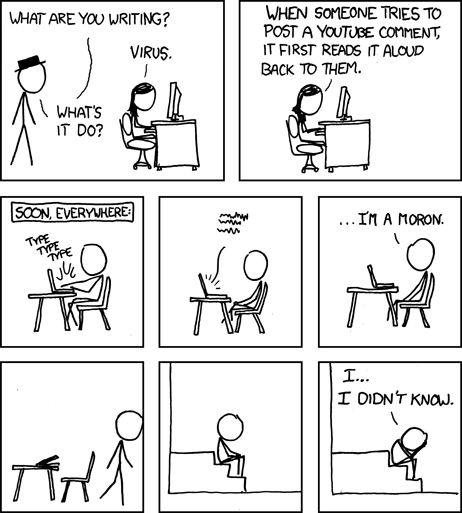
It would be very amusing, if an obscure, but funny comic prompted YouTube to implement this feature. While it’s not the most useful tool, I don’t see why people are complaining. If you don’t like it, how about not using it? Anyway, it’s not that pointless if you think about it. I would say about half of the comments on YouTube are rude, ignorant, and/or unnecessary. If this option creates a scenario like that in the comic and prevents even one of those “moronic” comments, then it will be worth it.

The ability to buy songs directly from YouTube is a huge development in the battle between copyright holders and sites like YouTube, that the industry desperately needed. On the other hand, the addition of an audio preview for comments is an insignificant option that nobody needed. At the end of the day though, progress has been made in the push for digital rights, and audio synthesizers are always fun to play with.
Sources:
YouTube intros links to buy music featured in videos
YouTube Audio Preview

2 comments:
XKCD is such gold. I think the comic did influence that feature- it's pretty popular comic with the geek crowd. :) Supposedly the "sudo make me a sandwich" one is posted on the wall in the offices of Google.
This is a pretty interesting article. I think its a good thing that YouTube is being responsible as well saving themselves from being sued by entertainment business.
Post a Comment